Thursday, July 04, 2013
Douglas Engelbart, Connecting the Dots 2, and Portable Computing Gets Quaint
 I was saddened to hear that Douglas Engelbart passed away. Of course, there was the mouse, but it was the 1968 Mother of All Demos that shows how much we owe to him. As a Steve Jobs fan, I understand why Engelbart has been called "Steve Jobs' Steve Jobs." These were things produced not just for their own sake, but with a larger goal in mind of raising our "collective I.Q." We all wish he'd benefited more personally from his contributions, so much more than a slick business plan.
I picked up this mousepad during a short engagement at SRI. I'm thankful to have experienced a world that would enable and support a person like Engelbart. That I know people who referred to him as just "Doug" is pretty cool.
 Connecting the Dots
 A couple of times here, I'd wondered about Valley technology to connect the dots to bolster national security. Of course, now with the NSA Prism program very much in the news, things have ramped up considerably. Working at Hortonworks and being immersed in Big Data, connecting the dots is very much a reality.
Portable
Of course today, my use of the term "portable computing" is just quaint. It has been "mobile" for some time, and with Google Glass, "wearable." My last Blackberry is a Torch, now in the same pile with all the other portable devices I've chronicled here, going down just as Palm did. I'm all in with Apple now, with an iPhone and iPad, and a random sprinkling of iPods.
Labels: equipment, Government, technology, valley history


Thursday, October 06, 2011
Apple without Steve Jobs
 Even though it was just a couple of years ago that I riffed on Steve Jobs being named CEO of the decade, I'd taken for granted how much of an impact he has had on our lives. Set aside the iPod etc things, and look a little deeper as David Pogue shared in a piece that he wrote in 1998. Without point and click, for example, there would be no Web. Let's ponder that for a moment.
This is my first laptop, a Powerbook 140. I still have it, along with the custom trackball I added. I guess that speaks to my connection to Apple. Come to think of it, driving past Apple buildings regularly makes it hard not to have it pretty embedded.
But the point is that it was during the period that Jobs was not at Apple. But it was still an Apple experience. Opening the small box it came in was complete with the Apple aesthetic. I turned it on and just started working. This was a time not too much past having to load operating systems on your new home computer. This is the way things should be. It is what we expect now.
Even though it was just a couple of years ago that I riffed on Steve Jobs being named CEO of the decade, I'd taken for granted how much of an impact he has had on our lives. Set aside the iPod etc things, and look a little deeper as David Pogue shared in a piece that he wrote in 1998. Without point and click, for example, there would be no Web. Let's ponder that for a moment.
This is my first laptop, a Powerbook 140. I still have it, along with the custom trackball I added. I guess that speaks to my connection to Apple. Come to think of it, driving past Apple buildings regularly makes it hard not to have it pretty embedded.
But the point is that it was during the period that Jobs was not at Apple. But it was still an Apple experience. Opening the small box it came in was complete with the Apple aesthetic. I turned it on and just started working. This was a time not too much past having to load operating systems on your new home computer. This is the way things should be. It is what we expect now.
 So, it is possible for Apple to continue to be Apple without him. Likely not the same Apple, but a lasting one. That things later fell off the rails there was a good thing. It was an object lesson for Jobs at the time, and for those there now. Attention needed to prepare for this time.
Labels: equipment, valley history
Saturday, April 16, 2011
End of The Flip: "We had no clue what we were doing.”
 And here we go with an occasional installment on portable computing. Cisco recently announced the end of life for the Flip camera. I didn't get it. I thought it was one of the most Apple things outside of Apple. Pure Digital got it right. What you need and nothing more. I remember pushing video from VCR tapes to digitize. Followed by Firewire connections to transfer the videos. Then this came along. Pop open that USB port and done. Plus, the software was smooth, effortless. Moving and managing content was effortless. When it came time to edit videos, I was back to Adobe Premier, but that was my wants, not a requirement.
I did 5K fun runs with it, even tried out the waterproof case for snorkeling (fail). It was exactly right for what a few years early meant a bag just for equipment on that vacation.
EOL for the Flip. I didn't get it. Neither did New York Times tech writer, David Pogue in his article "The Tragic Death of the Flip." He called out those who attributed the end to the smartphone, those "affluent, East Coast/West Coast, educated, New York Times-reading, Gizmodo-writing Americans." That leaves a pretty big market for all those copy cats to come in and fill the gap that the EOL Flip will leave behind. In Pogue's words, what Cisco ended up saying with the move was "We had no clue what we were doing.”
Work Life
I'm working in the SEO field now. The irony is that I have a lot of visibility into a lot of search-related things, but can't write much about it, just to be on the safe side. However, on something related, I was getting some phantom product postings on one of my entries here, so I turned off the backlinking and they stopped. As you might know, backlinks are one way for search engines to attribute authority to a page and site. This practice of creating spammy backlinks is a known bad practice, recently called out to a broader audience in another New York Times piece.
Labels: equipment, valley history
Thursday, April 29, 2010
Portable Computing Installment: Palm Pilot
 Today's announcement that Palm has agreed to be acquired by HP reminds me that it's been a while since I've done an installment of my history with portable computing. On the subject of being acquired, it's probably worth remembering that Palm has had a few owners over time, including U.S. Robotics and 3COM. Of course, HP had recently acquired 3COM, providing another one of those Silicon Valley paths crossing things. Also need to stop a moment and reminisce about U.S. Robotics, who was possibly best known at the the time for its modems. With high-speed internet access past 50% for U.S. households, there are generations of children who will not have experienced the hiss and boing-boing of dial ups. I remember the thrill of making my first modem connection. I need a moment.
I decided to join the Palm Pilot cult, and it was kind of like that, in 1997. I'd asked a co-worker at the time about his. I think I asked about how rugged it was. With the tech religious fervor that we've all come to expect, he threw his across the floor, with the battery case cover popping off and batteries flying out and landing under a desk. He put the batteries back in and it started right up.
The demo was good enough for me. There was so much to like, but the desktop synchronization was an example of how things should be designed. Dock it in its cradle, press one button, done.
I held on to that Palm for so long that I'd sometimes pull it out and have people variously wonder what it was or laugh at me for being so retro. Let's see. It provided me with a calendar, contacts, and notes. Anything else I need? Nope.
Later on, I replaced the Pilot with a Tungsten E2, but that was mainly for the nicer display. I still use it today along with a Blackberry. It does what I need.
I've written here about my first smartphone purchase. I really liked the Treo, and it made the most sense given that I already was a Palm person. But I finally went Blackberry to connect to Exchange at work. There were ways to connect the Treo, but the IT policy was Blackberry and it looked like they took measures to prevent non-Blackberry connections. You have to wonder how much that Blackberry lock in to Exchange hurt Palm.
Today's announcement that Palm has agreed to be acquired by HP reminds me that it's been a while since I've done an installment of my history with portable computing. On the subject of being acquired, it's probably worth remembering that Palm has had a few owners over time, including U.S. Robotics and 3COM. Of course, HP had recently acquired 3COM, providing another one of those Silicon Valley paths crossing things. Also need to stop a moment and reminisce about U.S. Robotics, who was possibly best known at the the time for its modems. With high-speed internet access past 50% for U.S. households, there are generations of children who will not have experienced the hiss and boing-boing of dial ups. I remember the thrill of making my first modem connection. I need a moment.
I decided to join the Palm Pilot cult, and it was kind of like that, in 1997. I'd asked a co-worker at the time about his. I think I asked about how rugged it was. With the tech religious fervor that we've all come to expect, he threw his across the floor, with the battery case cover popping off and batteries flying out and landing under a desk. He put the batteries back in and it started right up.
The demo was good enough for me. There was so much to like, but the desktop synchronization was an example of how things should be designed. Dock it in its cradle, press one button, done.
I held on to that Palm for so long that I'd sometimes pull it out and have people variously wonder what it was or laugh at me for being so retro. Let's see. It provided me with a calendar, contacts, and notes. Anything else I need? Nope.
Later on, I replaced the Pilot with a Tungsten E2, but that was mainly for the nicer display. I still use it today along with a Blackberry. It does what I need.
I've written here about my first smartphone purchase. I really liked the Treo, and it made the most sense given that I already was a Palm person. But I finally went Blackberry to connect to Exchange at work. There were ways to connect the Treo, but the IT policy was Blackberry and it looked like they took measures to prevent non-Blackberry connections. You have to wonder how much that Blackberry lock in to Exchange hurt Palm.Labels: equipment, valley history
Wednesday, November 11, 2009
Portable computing: pen and paper
You can get a flavor of the type of product from this video by Chris Brogan when he talked up Livescribe:
This is the kind of thing that got me to buy a CrossPad XP around 10 years ago:


This was from the same company that makes Cross Pens. Some folks might even have a Cross matching pen and pencil set if they rummage around their drawers. The CrossPad was co-marketed with IBM, and I gave Cross props for trying to get into something that was an extension into the future. You wonder how much better off Kodak might have been if they had gotten into digital photography around the same time. I'd actually bought a digital camera around then, but that's the subject of future post.
While I'm comfortable writing, the ability to sketch just feels more natural, particularly in the heat of a meeting or just getting ideas out. Also, it can be so much more efficient--the proverbial picture being worth a thousand words.
The thing worked remarkably well. The pages could be uploaded to a PC and you could do some text indexing so searching was possible. The only real downside was having to remember to tell it that you were moving to a new page. This involved pressing the pen tip into the circular indentation above the icon:

It got pretty messed up when you forgot to turn the electronic page. Just imagine yourself writing on the same sheet of paper more than once, top to bottom. That's what the notes ended up looking like.
I don't remember why I wandered away from it. I think it was a combination of things like getting refills for that specific pen, hooking up the cable to transfer data from the pad to the PC, and discovering that I really didn't take that many notes.
Today, unless I'm just flat out writing an extended bunch of prose, I'm more likely doodling on a blank sheet of paper or in a spiral bound notebook. But I wish I could get the best of both worlds: the ease of pen and paper plus the adjusting made possible with cutting and pasting on a computer.
Labels: equipment
Wednesday, July 08, 2009
Portable computing - the Bill Gates iPAQ and the Crossing the Chasm Guy
 Knowing the "Crossing the Chasm" guy, Geoff Moore, comes with a lot of good stuff. He's a great guy, funny and, of course, serious smart. Over the years, it's always something to get his read on things and just kick things around.
He's also generous, so I've benefited by getting the stuff he didn't need. In one World Economic Forum he participated in, Bill Gates was giving out PocketPCs, which resulted in a Compaq iPAQ 3850 trickling down to me.
I used this particular one in some product development. The PocketPC was at that historical juncture just before phones started becoming more capable. The roaming connectivity was Wi-Fi, which is what we were trying to use as a base at BravoBrava!, the technology incubator I was with at the time. The company itself is an interesting story. It was created when SRI was going to shut down its speech lab. Instead of letting everyone get dispersed, Joe Costello took the staff and set up the company. One of the companies that was spun off was Orb Networks. I worked with some of that product's early precursors, looking to get the user experience improved. The metaphor at the time was "friction" and trying to reduce the amount of friction in the experience. This included getting Wi-Fi set up in homes and teaching users about interacting with the PocketPC. When it's young and the parts are not ready, it's hard to get past the early adopters. Which, of course, brings us full circle to the Chasm guy.
Labels: equipment, valley history
Tuesday, June 23, 2009
Portable computing (the second notebook) and the FBI raid
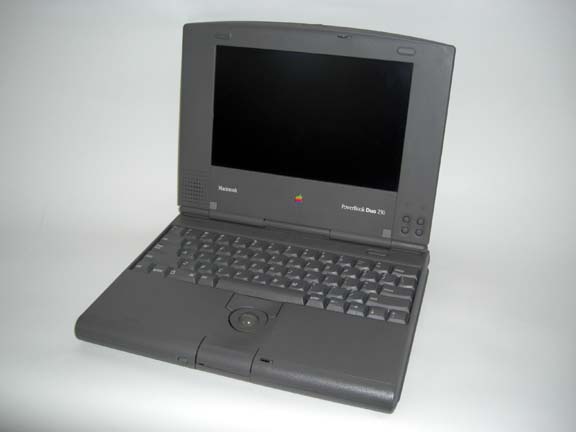
I needed a newer notebook because we were traveling a lot for one of my children who was playing soccer, and I was on deadline for a book. Although it was better than my first one, it still kind of sucked because we were doing page layout along with the writing. Small keyboard, small screen, slow performance. You get the picture.
The FBI Raid
Toward the end of that year, I was consulting with Avant! (yes, that is an exclamation mark), putting up a corporate Web presence for them. We were winding down the day when the FBI (windbreakers with the big three yellow letters on the back) and the Santa Clara County Sheriffs came streaming through the hallways. As they swept us up, one of the women went to get her purse. Nope. Leave it. Did we know where the tape back ups were? Say what?
The entire company was pulled into a single meeting room where we were going to be questioned one at a time. I learned there about the trade secrets dispute between Cadence Design Systems and Avant!. (A Forbes article has a rundown of the whole thing, though it incorrectly placed the raid in Fremont, instead of Santa Clara.)
I was settling in for a long session because there were a bunch of us. But the CEO, bless his heart, asked them to put me at the front of the line because I was just a consultant who didn't know anything about this.
The whole thing looked like what I guess a drug bust might look like. The person interrogating me had a sheet with questions that she dutifully read. The main question was whether I knew anything about the source code. This was my first "isn't that interesting" (ITI) moment for the event. Rattling around in my head was that none of these people knew what source code was. I repressed my tendency to make a smart comment (which almost got me in trouble on the Canadian border once) and went with the program.
Which led to the second moment: how any of this is connected to the pictured PowerBook Duo 230. After I was released from the meeting room, I went to pick up this same PowerBook. I was directed to an office where an officer had it open (and sitting precariously on the edge of a desk). Again, we went through the source code questions. Even behaving myself, he wasn't releasing the thing. The scary thing is that there was nothing to prevent them from seizing it and keeping it as part of the raid. When did I do my last back up?
I was bummed, so I decided to whine as only a net citizen could in 1995: by sending email to a bunch of my friends (darn I wish I knew where that email was now). I'd worked at Cadence previously for seven years, so that was my main audience. I got responses right away with the expected "Wow". What I didn't expect was my third moment: a phone call within about two hours of the email from San Jose Mercury News technology writer, Dean Takahasi, for an interview. This kind of thing at the time was unheard of. It's not like Google existed, or even AltaVista. I had to ask, how did he find me and get my number? He said, "You know, it's the Internet."
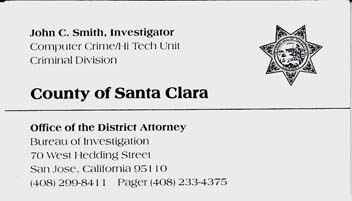
Later, I was able to work with the Avant! folks to get my Duo back (obviously, it's in the photo). The law enforcement person I picked it up from was one of the first of the more tech inclined people in that line. He seemed to chuckle at the notion of me running around with a dev environment on my wimpy little machine. (I kept his card and turns out he was what he appeared to be.)
My last moments were around my propaganda campaign against Cadence. The Avant!-Cadence dispute was being portrayed as a David and Goliath thing, and a bunch of the reporting favored Avant!. (Does that punctuation look strange?) Earlier that year, the San Jose Mercury News had launched its Web site. The weird thing was that it wasn't posting many of its news stories. They were instead pushing businesses to place ads on their site. I'd been in contact with someone there, so I pitched--and they went for--the idea of posting the Avant! pieces, and we'd link to them from the Avant! site. This could have possibly been the first instance of this happening since, at the time, I don't think there were any other newspapers with a Web site.
I'd since wondered about the ethics of my work with Avant!. As history played out, they really did steal trade secrets. So, I was working for the wrong side of the law. Although I can do a "How was I to know?", and I was doing the right thing by my client, I'll admit that I didn't think about it much.
Joe Costello was the CEO at Cadence while I was there and through this whole episode with Avant!. He's a really good guy and great leader. No bad feelings given that I worked for him two more times since at think3 design and BravoBrava! (darn exclamation mark again).
Commercials
I was interested in learning more about these Google ads, so I added this section on the left with AdSense. I'm curious about what types of ads appear based on my content. Out of the gate, I'm getting home remodeling related ads. Maybe it's keying off the word "design"?
© Arthur Ignacio Consulting 2009
Labels: equipment, valley history
Monday, June 08, 2009
Portable computing - netbooks and next
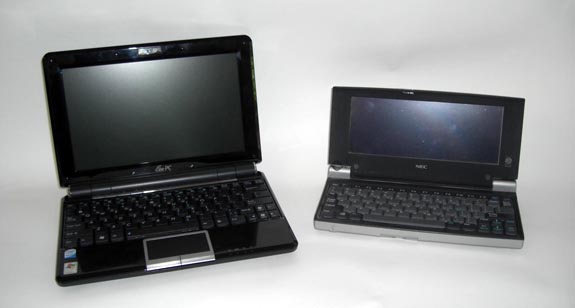
The MobilePro display is 640 x 240 256 color LCD touchscreen. Yep, it came with a stylus so you can tap, click, and drag directly on the screen. It also has character recognition software so I could write (handwriting) using the stylus. With the cover closed, you can press an external button to record audio ("Note to self: pick up a gallon of milk."). Weighs in at 1.88 lbs.
It came with Microsoft baby Explorer and Office. Internet connection was a built-in 33 Kbps modem. Kind of interesting to think about if wireless connections were available then.
True: I wrote staff reviews on it while I was on vacation in Maui.
BTW, the Eee PC is nice little machine, too. Prone to fingerprint smudges on the shiny shell, but no downside otherwise. Added the suggested 2G memory upgrade. Easy install.
Site Change
I reworked the info-design site a little. It's been a few years now that I've been essentially blogging instead of anything else on this site (web logging since 1995!). So, I've moved over to a completely blog front end. I have a historical link on the left side.
Labels: equipment
Sunday, May 20, 2007
Portable Computing - first installation
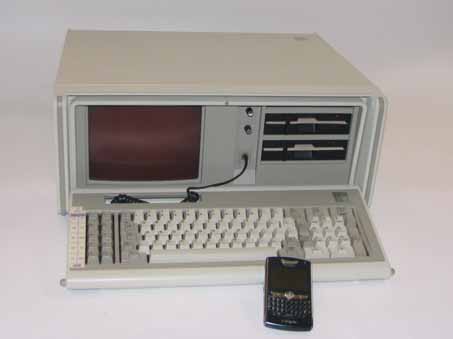
May 20, 2007 - I occasionally think about putting together a walk through my history of portable computing. But life keeps getting in the way, just look at the time between this and my previous entry. This isn't that walk through, but just a quick peek.Here are my first and latest portables together, an IBM Portable PC 5155 and a Blackberry 8800:
What's interesting is that the this-is-really-neat-new-gizmo feeling I get about the Blackberry, I also had for the IBM Portable back some 20 years ago. Hey, now I can take work home with me and when I travel with the family, I can connect and continue working. DOS, WordStar, and text editing Fortran on an IBM/370: life is good.
Before I settled on the Blackberry 8800, I auditioned a Treo 680 and a Blackberry Pearl. I really liked the Treo, but connecting it to the MS Exchange work just wasn't going to happen. I even liked it after one of those customer-service go -nowhere episodes when I hit the wrong key on initial startup and went into a Spanish language interface. Nothing like listening to the support rep surfing the web for an answer. The Pearl was good, too, until I had to do some amount of text entry.
Updates:
Since my last entry, I spent time with some good people at CollabNet, where I headed development of the CollabNet Enterprise Edition product. Founder Brian Behlendorf and the company are a chapter in Thomas Friedman's The World is Flat. I had a chance to experience the OpenSource culture and visited the city of Chennai in India. During my visit there, my traveling companions and I were treated to a visit to Mahabalipurum. Cruising Chennai at night in an autorickshaw was a kaleidoscope of all the senses.
I'm now in client engineering at Acxiom|Digital, an email and search marketing and customer acquisition company. It was formerly Digital Impact before being acquired by Acxiom. Interestingly, Acxiom led off the Wired Index in June 1998. In that issue of Wired Magazine, the blip on Acxiom was
"Information is money. Lots of information is lots of money. Add quick, cheap processing and you get a key piece of infrastructure for the networked economy."
Digital Impact was a public company and at the time Acxiom, also a public company, acquired it. This past week, Acxiom announced that it was being acquired and taken private.
Labels: equipment
